LiFePO4, Li-NMC, or Solid-State: Comparison, Specifications, and Cycle Life


Choosing the right cell chemistry is a fundamental engineering decision that dictates mission duration, operator safety, and combat effectiveness. Today, the unmanned systems battery market is dominated by three core technologies: LiFePO4, Li-NMC, and Solid-State.
Each resolves the eternal compromise between energy density, cycle life, safety, and weight in its own way. In this article, PAWELL experts provide a detailed technical breakdown of each chemistry to answer the main practical question: which battery pack is best suited for a drone, which for an Unmanned Ground Vehicle (UGV), and which for EW systems.
Key Parameters for Comparing Battery Chemistries
Before comparing cells, we must define the parameters used to evaluate their efficiency:
Nominal cell voltage (V) — The baseline voltage of a single cell.
Specific energy density (Wh/kg) — How much energy the battery pack "holds" per kilogram of weight. A crucial factor for platform autonomy.
Maximum discharge current (C-rating) — The cell's ability to rapidly deliver energy (necessary for sharp maneuvers) without sustaining damage or overheating.
Cycle life (number of cycles) — The number of charge/discharge cycles a battery withstands before its capacity drops below 80%.
Thermal stability (thermal runaway) — Resistance to physical damage, shrapnel penetration, or short circuits without catching fire.
1. Li-NMC (Lithium Nickel Manganese Cobalt Oxide)

Li-NMC is the industry standard for high-current cell chemistry. Thanks to its ideal energy-to-weight ratio and resilience to peak loads, it is the optimal choice for FPV drones and light strike UAVs.
✓ Advantages:
Highest discharge rate: Capable of delivering the necessary power "burst" for aggressive piloting (25C–100C+).
High energy density (150–250 Wh/kg): Maximum capacity at minimum weight.
Form-factor flexibility: Easily adapts to the geometry of the platform's chassis.
✗ Disadvantages:
Low damage resistance: In the event of physical penetration, the liquid electrolyte poses a high risk of thermal runaway and fire.
Short cycle life: On average 1,000–2,000 cycles, and even fewer under extreme FPV loads.
Sensitivity: Requires strict control of storage voltage and tolerates deep discharges poorly.
2. LiFePO4 (Літій-залізо-фосфатні)

LiFePO4 cells are built for the harshest operating conditions. Despite their heavier weight, they are the absolute leaders in fire safety (highly resistant to ignition upon penetration) and longevity. The ideal solution for UGVs and EW systems.
✓ Advantages:
Extreme safety: The cells are highly resistant to thermal runaway; they do not explode or catch fire even if punctured or short-circuited.
Massive cycle life: Withstand 3,000 to 5,000+ cycles without significant degradation.
Stability: Maintain a flat voltage curve almost until fully discharged.
Cost-effectiveness: Lowest cost per Wh (no expensive cobalt required).
✗ Disadvantages:
Weight: Lower specific energy density (90–160 Wh/kg), resulting in heavier and bulkier battery packs.
Lower voltage (3.2 V): Requires more cells in series to achieve the desired voltage.
Cold sensitivity: At temperatures below 0°C, LiFePO4 cells noticeably lose available capacity, and charging without pre-heating can damage the cells.
3. Solid-State (Твердотільні та напівтвердотільні)

Solid-State batteries are an innovation featuring a solid electrolyte that eliminates the risk of fire and offers unprecedented energy density. They provide benchmark safety, frost resistance, and maximum flight range for high-value platforms (like the Vampire). Solid-State technology combines the best traits of previous-generation cells.
✓ Advantages:
Maximum energy capacity: Energy density is 20-30% higher than classic Li-NMC (up to 420 Wh/kg).
Enhanced safety: A significantly lower risk of fire due to the absence of large volumes of flammable liquid electrolyte.
Frost resistance: Better capacity retention at sub-zero temperatures (down to -20°C).
✗ Disadvantages:
High cost: The technology is expensive and complex to manufacture.
Availability: Limited supply in mass production.
Comparative Table of Battery Chemistries
Parameter | LiFePO4 | LiNMC | Solid-State |
Nominal Voltage | 3.2 V | 3.6–3.7 V | ~3.7 V |
Specific Energy Density | 90–160 Wh/kg | 150–250 Wh/kg | 260–420 Wh/kg |
Cycle Life (to 80% capacity) | 3,000–5,000+ cycles | 1,000–2,000 cycles | 2,000–6,000+ cycles |
Fire Safety | Highest resistance | Elevated risk | Maximum safety (no liquid electrolyte) |
Cold Weather Performance | Rapid capacity loss at <0°C, charging without heating is prohibited | Moderate | Excellent (retains up to 80-90% capacity) |
The Practical Choice: What to Install Where?
The Best Battery Pack for UAVs

In the air, every gram of a UAV battery critically affects flight range.
FPV Kamikazes and Light Strike Drones: The undisputed leader is Li-NMC. They provide the necessary dynamics for target engagement at a low weight.
Heavy Strike Drones (like the Vampire), Reconnaissance Aircraft (BVLOS): The optimal choice is Solid-State. They allow the platform to carry maximum energy, extending the combat radius, and operate stably in winter conditions.
Agricultural and Geodesic UAVs: LiFePO4 is highly cost-effective due to its ability to operate for years (frequent mission rotations).
The Best Battery Pack for UGVs (Unmanned Ground Vehicles)

For ground platforms (turrets, minelayers, logistics), weight is less critical. The main priorities are the UGV battery pack's endurance and survivability.
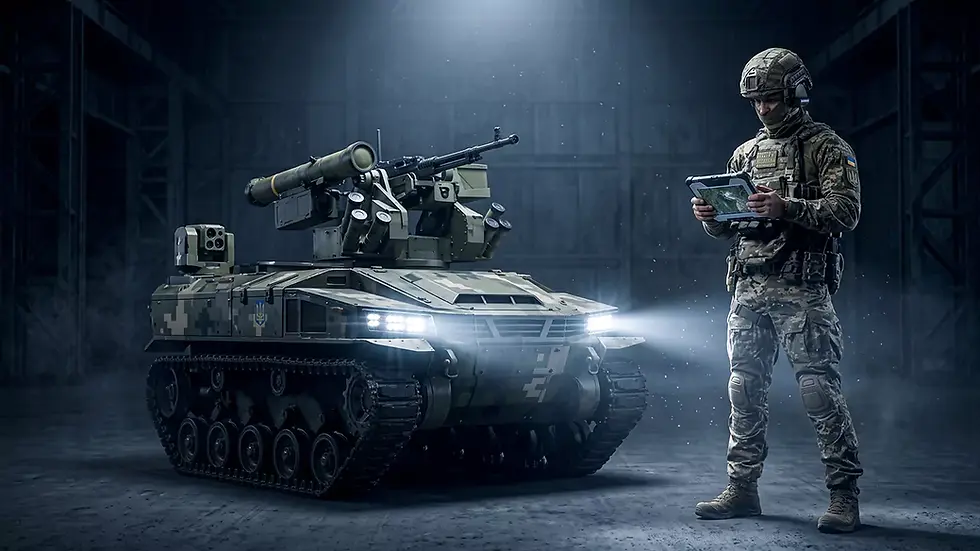
The ideal choice for most UGVs is LiFePO4. This chemistry provides stable power for thousands of cycles. Even if the drone takes a shrapnel hit in the battery compartment, LiFePO4 will not turn it into a fireball.
For evacuation and demining UGVs in extreme-risk zones (if the budget permits), it is advisable to use Solid-State.
The Best Battery Pack for EW Systems and Power Stations

Autonomous EW systems and portable base stations (such as Starlink power stations) also demand absolute reliability.
PAWELL's choice is LiFePO4. It offers longevity, safe storage in dugouts, and stable operation under continuous load.
How to Extend Battery Life: Practical Tips

Even the most expensive Solid-State pack or resilient LiFePO4 can degrade in a few months if basic operational rules are ignored. To maximize cycle life, PAWELL engineers recommend following four golden rules:
1. Storage Mode
Never leave batteries fully charged (100%) or completely depleted (0%) for more than 2-3 days. Prolonged periods at maximum voltage cause chemical stress, leading to rapid capacity loss and cell swelling (especially critical for Li-NMC). The optimal charge level for long-term storage in a dugout or warehouse is 50–60%.
2. Prohibition on "Cold" Charging
Lithium cells do not forgive charging in freezing temperatures. If a platform (UAV or UGV) returns from the freezing cold, you must absolutely not plug the battery into a charger immediately. Doing so causes lithium plating on the anode—a process that irreversibly kills capacity. Always let the battery pack warm up to above freezing (+15...20°C) before connecting it to power.
3. Depth of Discharge (DoD) Control
Do not drain the battery to absolute zero. For FPV drones and fixed-wing UAVs using Li-NMC or Solid-State, plan the return and landing so that the cells retain 15–20% energy reserves. Although UGV battery packs (LiFePO4) are equipped with BMS boards that protect against critical discharge, frequently draining them to the cutoff voltage significantly shortens their potential lifespan.
4. Standard Charging Currents (C-Rating)
Unless the combat situation requires an emergency return of the platform to the sky, avoid constant fast charging with ultra-high currents. The best practice for the health of any chemistry is charging at 0.5C – 1C (e.g., charging a 30 Ah battery with 15–30 Amps). Slow charging prevents cell overheating and preserves their internal structure.
Build Quality: What PAWELL Focuses On

Cell chemistry dictates a battery's theoretical potential, but true reliability, safety, and cycle life are determined by build quality. Two packs made from identical cells can behave completely differently in the field—it all depends on how strictly each critical manufacturing stage is controlled.
Grading and Matching: We do not assemble batteries "blindly." Every batch of cells undergoes preliminary testing for capacity and Internal Resistance (IR). Only cells with identical metrics make it into a PAWELL battery pack—this completely eliminates cell imbalance under load and significantly extends the entire pack's lifespan.
Automated Laser Welding: Instead of classic spot welding, which can cause localized overheating of the cells, we utilize modern robotic laser welding. The welding precision is 0.01–0.05 mm. This creates a monolithic contact with minimal contact resistance: the connections do not heat up during peak discharge currents and will not tear off during hard landings.
Smart BMS and Active Balancing: For complex platforms, we integrate reliable BMS boards with ample current headroom. Not only do they provide hardware protection against short circuits, overcharging, or deep discharge (critical for LiFePO4), but they also evenly balance the voltage across each parallel group, squeezing out maximum effective capacity.
Multi-Layer Insulation and Thermal Protection: Every contact and cell is securely insulated with dielectric fish paper, while power wiring (flexible AWG silicone cable) is secured with thermal expansion gaps in mind. For Unmanned Ground Vehicles (UGVs), we additionally enclose the battery packs in robust, moisture- and fire-resistant polyamide cases.
Final Stress Testing: PAWELL battery packs do not leave the production floor without rigorous inspection. Finished battery packs undergo load testing (simulating real flight conditions or UGV operating profiles) to verify stable discharge rates, the absence of critical voltage sags, and the correct operation of BMS protections. You receive a power solution that 100% matches the declared specs and is ready for combat missions straight out of the box.

Frequently Asked Questions (FAQ)
Which battery chemistry is the best — LiFePO4, Li-NMC, or Solid-State?
There is no universal answer. Li-NMC is ideal for maximum power at minimal weight, LiFePO4 is for safety and longevity, and Solid-State is for maximum energy density and stability in cold weather.
What does the 6S4P marking on battery packs mean?
The letter "S" denotes the number of cells connected in series (which affects total voltage). The letter "P" denotes the number of parallel groups (which affects total capacity and discharge current). For example, 6S4P means 6 cells in series and 4 in parallel.
What is the difference between LiPo and Li-NMC?
"LiPo" primarily refers to a form factor (a soft pouch with a gel-polymer electrolyte) rather than a separate chemistry; most LiPo packs actually use Li-NMC chemistry. Cylindrical Li-NMC cells (18650/21700) have a rigid casing and typically offer a longer cycle life at lower peak currents.
How many cycles can a LiFePO4 battery pack withstand?
Depending on the manufacturer and operating conditions, from 3,000 to over 5,000 cycles before capacity drops by 20%, which is significantly higher than typical Li-NMC cells.
Are Solid-State battery packs really safer?
Yes, due to a significantly reduced amount of flammable liquid electrolyte, the risk of thermal runaway is much lower. However, most products on the market today are semi-solid-state rather than fully solid-state, so specifications should be verified with each manufacturer individually.
Which battery pack is best for UAVs?
It depends on the drone type: Li-NMC for FPV/strike drones, LiFePO4 for endurance/agricultural drones, and Solid-State for Vampire/BVLOS and winter missions.
Which battery pack is best for UGVs?
For most Unmanned Ground Vehicles, LiFePO4 is optimal due to its cycle life and safety, given the less rigid weight constraints. For heavy platforms in high-risk zones, Solid-State is recommended.
Which battery pack is best for EW systems and communication stations?
Autonomous EW systems require absolute reliability in trench conditions. The best choice is LiFePO4. It offers safe storage near personnel, longevity, and stable operation under continuous load.
Need reliable power integration for your product?
There is no perfect battery for all tasks simultaneously, but there is proper engineering calculation. PAWELL provides professional mass and custom manufacturing of battery packs in Ukraine, selecting the best cell chemistry (LiFePO4, Li-NMC, Solid-State) to meet your specific technical requirements.