Універсальні акумулятори для безпілотних наземних транспортних засобів (UGV)

Updated: Aug 20
Безпілотні наземні транспортні засоби (UGVs) змінили правила гри на сучасному полі бою. Вони виконують небезпечні завдання, такі як розмінування, логістика, евакуація поранених і бойові місії. Проте, незалежно від того, наскільки успішним є шасі або бойовий модуль, ефективність будь-якого UGV залежить від його "серця" — акумуляторної батареї.
А батарея UGV — це не споживча батарея, а спеціально розроблений продукт, який повинен витримувати бруд, вологу, мороз, вібрацію та найсуворіші польові умови, забезпечуючи при цьому повний струм за командою оператора. У цій статті ми розглянемо, які наземні дрони працюють на українському фронті сьогодні, вимоги до джерела живлення, встановлені державою, і як PAWELL виготовляє акумуляторні батареї UGV, щоб відповідати технічним специфікаціям будь-якого виробника.
Що таке UGV і чому йому потрібна високоякісна батарея?
Безпілотний наземний транспортний засіб — це дистанційно керована або напівавтономна платформа, яка виконує завдання замість людей у зонах, де вартість помилки — це життя. Останніми роками UGV еволюціонували з експериментальних прототипів у постійний елемент бойових формувань: вони транспортують боєприпаси та воду до позицій, евакуюють поранених і пошкоджене обладнання з "сірого зони", очищають шляхи через мінні поля, проводять спостереження і навіть виконують бойові функції.
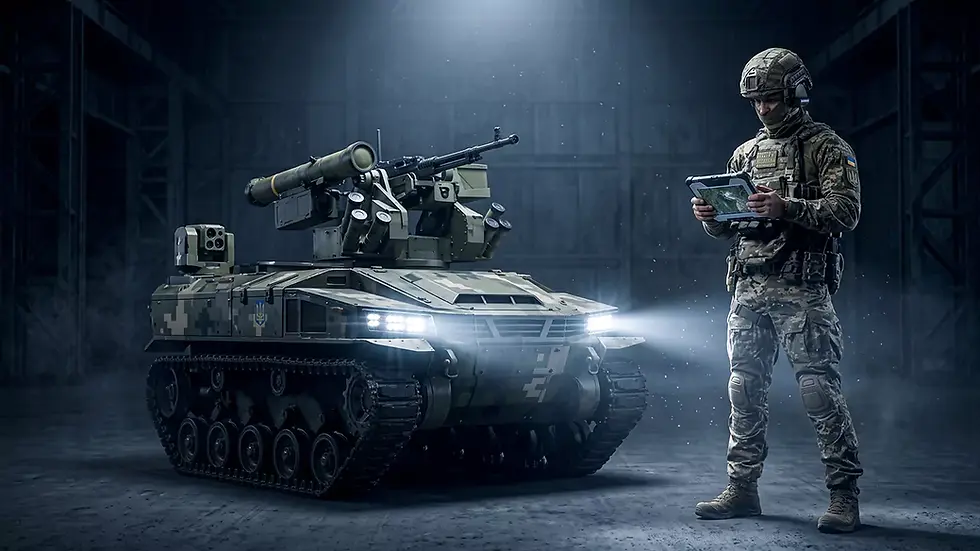
Категорії застосування UGV за типом завдання
Незалежно від виробника, всі безпілотні наземні транспортні засоби зазвичай діляться на кілька функціональних груп — і кожна з них накладає свої вимоги на акумуляторну батарею.
Удар / Вогнева підтримка: Платформи, обладнані дистанційно керованим бойовим модулем (кулемет, гранатомет, турель). Батарея працює в найсуворіших умовах: одночасно живлячи трансмісію, стабілізацію платформи та електроніку наведення. Основна вимога — висока пікова швидкість розряду без падіння напруги під час стрільби або різких маневрів.
Одноразовий штурм (камікадзе): Специфічна підкатегорія, призначена для знищення укріплень або бронетехніки шляхом детонації. Батарея використовується лише для одного короткого циклу з максимальною потужністю, тому пріоритет зміщується з циклу життя на максимальну специфічну енергію при мінімальній вазі.
Розвідка та спостереження: Компактні, низькопрофільні платформи для розвідки, виявлення та релейного зв'язку. Вони можуть залишатися в режимі очікування на позиції протягом годин, тому ключовою характеристикою батареї є велика ємність у компактному форм-факторі та низький саморозряд у режимі очікування.
Логістика та евакуація: Транспортування боєприпасів, води, медичних засобів, а також евакуація поранених або пошкодженого обладнання з зони удару. Тут акумулятор UGV повинен підтримувати стабільну напругу під час тривалої механічної навантаженості — поза дорогою, під час підйомів і з повним вантажем на борту.
Інженерні та розмінувальні роботи: Очищення мін, встановлення або зняття перешкод, прокладка кабельних ліній та інші технічні завдання в польових умовах. Витривалість батареї критична для таких систем: вона повинна завершити повний місійний цикл без підзарядки, витримуючи вібрації, удари та години безперервної роботи далеко від бази.
На практиці межі між категоріями UGV розмиті — одне й те саме шасі часто адаптується для кількох ролей одночасно. Тому виробники все частіше замовляють спеціально розроблені акумуляторні батареї, адаптовані до конкретного профілю застосування, а не готові продукти. Розуміючи цю динаміку ринку, PAWELL пропонує розробку індивідуальних енергетичних рішень для будь-якого UGV — від легких розвідувальних роботів до важких логістичних платформ.
Основна причина швидкого зростання популярності UGV — це проста рівняння: робота може бути замінена, людина — ні. Де дрони-камікадзе та артилерія роблять рух піхоти через відкриту місцевість смертельно небезпечним, наземний робот бере на себе рутинні та найнебезпечніші завдання. І в кожному з цих сценаріїв саме батарея визначає, чи доставить робот вантаж, евакуює поранених, зможе повернутися — чи просто зупиниться на півдорозі через розряджену батарею.
Найпопулярніші UGV на фронті: Огляд моделей
Останніми роками в Україні з'явився цілий клас вітчизняних наземних роботів, кожен з яких вирішує своє специфічне завдання.

TerMIT — Гусенична система, яка стала одним із символів українського розмінування. Завдяки своїй низькій силуету та низькому центру тяжіння, вона пересувається по бездоріжжю, крутих схилах і окопах. У ворожому мінному полі вона може очистити шлях до 50 метрів завдовжки та 6 метрів завширшки. Остання версія платформи може перевозити до 300 кг вантажу, а заряд батареї триває кілька годин безперервної роботи.

TarGun — Компактний колісний UGV, який можна транспортувати в мікроавтобусі або на автомобільному причепі, при цьому робот може перевозити до 200 кг вантажу — боєприпасів, їжі та спорядження. Платформа виявилася настільки універсальною, що вона слугує основою для евакуаційних модифікацій (евакуація поранених і пошкоджених дронів з "сірого зони") та бойових варіантів, обладнаних дистанційно керованим модулем "Шабля" для придушення вогню ворога.

Ratel X — Один з перших українських UGV-камікадзе: платформа з підвищеним вибуховим зарядом, призначена для знищення ворожої бронетехніки та руйнування укріплень, де інші засоби виявилися неефективними. Досвід Ratel продемонстрував принцип, який тепер визначає розвиток цього класу обладнання: кожна модель UGV розробляється для конкретного бойового завдання, а вимоги до батареї залежать безпосередньо від цього завдання.
Список активно розширюється: "Гулівер", "Гном-ЛМ", "Воля-Е", важкі платформи, такі як "Протектор", та десятки маловідомих моделей, які наразі проходять кодифікацію Міністерством оборони. Вантажопідйомність цього класу обладнання варіюється від 15 кг для легких камікадзе до понад 1,000 кг для важких логістичних платформ, при цьому швидкості та робочі діапазони значно різняться.
Важлива примітка: Не існує універсальної батареї UGV. Через колосальні відмінності у вантажопідйомності та профілях місій кожна бойова платформа вимагає строго індивідуального підходу до проектування енергетичної системи.
Вимоги до батарей UGV
Гусениці, маніпулятори, тепловізори та системи зв'язку — все це безглуздо без джерела живлення, здатного витримувати польові умови. Тому в технічних вимогах до тендерів на закупівлю UGV держава чітко викладає набір суворих умов, що стосуються саме батареї:
Швидка заміна: Акумуляторна батарея UGV повинна бути замінювана на позиції за кілька хвилин, без інструментів або спеціальної підготовки оператора.
Швидка зарядка: Потужність заряджання до 2.5–3 кВт у польових умовах від генераторів потужністю 1.5+ кВт, оскільки на фронті просто немає часу на повільне відновлення обладнання.
Обов'язковий запасний комплект: Кожна система повинна включати запасний комплект батарей — щоб робот не став стаціонарною мішенню через одну розряджену батарею.
Час розгортання: Вся система, включаючи підключення живлення та тестування, повинна бути готова до роботи протягом максимум 20 хвилин.
Стабільність під навантаженням: Батарея живить не тільки трансмісію, а й системи зв'язку — Starlink, радіоканали, GSM/3G/4G/5G модулі — і тому не повинна зазнавати падінь напруги під час пікових струмів.
Різноманітні профілі навантаження: Легкий 15 кг камікадзе з діапазоном 20 км і важка логістична платформа вагою 1,000 кг з діапазоном 50 км потребують принципово різних рішень для батарей з точки зору ємності, струму розряду та форм-фактора.
Саме тому галузь все частіше обирає шлях, який давно довів свою ефективність в авіації та електротранспорті: проектування специфічного рішення для конкретного шасі, завдання та бюджету, а не "універсальної батареї для всього".
Батареї PAWELL UGV: Акумуляторна батарея для будь-яких технічних вимог

PAWELL розробляє та виготовляє акумуляторні батареї для безпілотних наземних транспортних засобів усіх класів — від легких розвідувальних платформ до важких логістичних роботів з вантажопідйомністю до тонни. Ми не просимо виробників UGV адаптувати свій дизайн до готової батареї; навпаки, акумуляторна батарея UGV розробляється для відповідності існуючому шасі та електроніці клієнта.
1. Індивідуальні параметри: Клієнт визначає ключові характеристики — робоча напруга, ємність, максимальний струм розряду, тип і розміщення військових роз'ємів, а також розміри монтажного відсіку — і отримує акумуляторну батарею, яка стає рідною складовою їх платформи, а не поспішним компромісом.
2. Хімія елементів для завдання: У виробництві використовуються три основні типи елементів, і вибір між ними завжди є інженерним компромісом між безпекою, енергетичною щільністю та циклом життя:
LiFePO4 (Літій-залізо-фосфат) | Li-NMC (Літій-нікель-марганець-кобальт оксид) | Тверді елементи (Тверді елементи) |
Найвищий рівень термічної стабільності, стійкості до морозу та механічних пошкоджень, що робить його базовим вибором для платформ, що працюють у зонах прямого вогню. | Вища специфічна енергетична щільність при меншій вазі та розмірах, що критично для легких і швидких платформ, де кожен додатковий кілограм зменшує робочий діапазон. | Наступне покоління хімії, що поєднує високу енергетичну щільність з підвищеною безпекою; ми впроваджуємо ці рішення для клієнтів, які потребують максимальної автономії при мінімальній вазі. |
3. Формат швидкої заміни: Батареї PAWELL виготовляються у форматі модулів швидкої заміни з міцними ергономічними ручками та захищеними контактами — заміна акумуляторної батареї на позиції займає кілька хвилин, без інструментів. Кожна батарея підтримує швидку зарядку до 2.5–3 кВт у польових умовах від генераторів потужністю 1.5+ кВт, а обов'язковий запасний комплект одразу включається до пакету.
4. Інтелектуальна BMS: Кожна батарея PAWELL обладнана платою системи управління батареєю, яка контролює температуру, баланс елементів та струм навантаження, обробляє пікові пускові струми під час руху по бездоріжжю та стабільно живить усі канали зв'язку без падінь напруги.
5. Серійне виробництво: PAWELL виготовляє батареї не індивідуально, а партіями — з повторюваною якістю від першого до тисячного одиниці. Це критично для виробників, які постачають обладнання за державними контрактами, які повинні гарантувати ідентичні характеристики в кожній партії.

6. Практично перевірений досвід: Навіть до входу в сегмент UGV компанія отримала практичний досвід у виробництві батарей для суміжних галузей — акумулятори для БПЛА та FPV-дронів, де вимоги до надійності, ваги та стабільності під навантаженням не менш суворі, ніж у наземній робототехніці. Ми переносимо цей досвід на виробництво батарей UGV: застосовуючи ті ж підходи до контролю якості елементів, складання батарей та тестування навантаження.
7. Сертифікація: Продукція PAWELL проходить необхідні випробування та сертифікацію, необхідні для обладнання подвійного призначення. Це дозволяє акумуляторам PAWELL безперешкодно інтегруватися в системи, що постачаються за державними контрактами Міністерства оборони.
Як батареї PAWELL відповідають вимогам державного тендеру на 50,000 UGV

У 2026 році держава оголосила про масову мету — закупити 50,000 безпілотних наземних транспортних засобів через серію прозорих, конкурентних тендерів.
Процедура складається з двох етапів: спочатку учасник підтверджує технічну відповідність через порівняльну таблицю, а потім переходить до етапу ціноутворення, де, за рівних технічних характеристик, виграє найнижча ціна на батарею.
Значна частина технічних вимог тендеру стосується саме енергетичного компонента системи, і батареї PAWELL розроблені для безпосереднього вирішення цих вимог:
Потужність і швидка зарядка: Формат швидкої заміни, зарядка 2.5–3 кВт від польових генераторів та обов'язковий запасний комплект — все це закладено в конструкцію батарей PAWELL з самого початку.
Витривалість під навантаженням: З вантажопідйомністю UGV від 15 кг до 1,000 кг, швидкостями від 12 до 40 км/год, і системами зв'язку, які потребують живлення без падінь напруги — наша інтелектуальна BMS та межі струму розряду забезпечують стабільну роботу навіть на межах можливостей шасі.
Готовність до майбутніх інфраструктурних викликів: Галузь активно обговорює польові гібридні зарядні станції та інтеграцію дизельних генераторів безпосередньо на борту UGV для зарядки на ходу. Батареї PAWELL розроблені з урахуванням інтеграції в такі гібридні енергетичні системи.
Кодифікація та допуск до тендеру: Обов'язковою умовою участі є наявність кодифікації NSN (NATO Stock Number) для продукту; без цього компанію не допустять до тендеру. Використання сертифікованих акумуляторних батарей PAWELL, зібраних відповідно до документованих стандартів якості, спрощує процес для виробників UGV, щоб пройти технічні перевірки та отримати кодифікацію для своїх завершених систем.
Часто задавані питання про батареї UGV
Яка батарея потрібна для UGV?
Це залежить від класу платформи. Легкий 15–20 кг камікадзе UGV потребує компактної, легкозамінної батареї з високою специфічною енергетичною щільністю (Li-NMC), тоді як важка логістична платформа вагою 500–1,000 кг вимагає високої ємності, термічно стабільної батареї LiFePO4 з високим струмом розряду. Універсального рішення не існує: параметри обираються для конкретного шасі та завдання.
У чому різниця між батареями LiFePO4 та Li-NMC для UGV?
LiFePO4 більш стійка до перегріву, заморожування та механічних пошкоджень — що робить її оптимальним вибором для обладнання, що працює під вогнем. Li-NMC легша та компактніша при такій же ємності, тому її обирають для швидких, легких платформ, де кожен грам має значення.
Чи можу я замовити акумуляторну батарею UGV, адаптовану до моїх технічних вимог?
Так. Українська компанія PAWELL розробляє батареї відповідно до технічних специфікацій клієнта — включаючи напругу, ємність, струм розряду, тип роз'ємів та розміри монтажного відсіку — після чого переходить до серійного виробництва.
Чи має PAWELL сертифікацію, необхідну для участі в державних тендерах?
Продукція PAWELL проходить випробування та сертифікацію, необхідні для обладнання подвійного призначення, що спрощує процес для виробників UGV, щоб пройти технічні перевірки та отримати кодифікацію NSN для своїх завершених систем.
Скільки часу потрібно для виготовлення партії акумуляторних батарей UGV?
Терміни залежать від обсягу партії та складності технічних специфікацій. PAWELL працює як з малими партіями для тестових зразків, так і з великими партіями для постачальних контрактів — точні терміни узгоджуються індивідуально для кожного замовлення.
Бойова готовність сучасних UGV визначається не лише їх шасі або бронею, а й якістю їх акумуляторної системи. Акумулятор, що швидко замінюється і здатний витримувати польові умови, — це деталь, яка не видно на фотографіях, але є вирішальною на позиції. Якщо ви розробляєте наземні платформи, готуєтеся до державних тендерів або прагнете підвищити автономність існуючого обладнання — вам потрібне рішення, розроблене спеціально для ваших завдань.
Потрібно інтегрувати надійне живлення у ваш продукт?
Зв'яжіться з інженерним відділом PAWELL. Ми розробимо акумуляторну батарею (LiFePO4, Li-NMC або тверду) відповідно до ваших технічних специфікацій — з урахуванням ємності, струму та роз'ємів. Ми гарантуємо серійну якість та відповідність військовим стандартам.


