Leleka-100 UAV: Full Overview of Specifications, Combat Use, and Battery Requirements


The "Leleka-100" unmanned aircraft system is one of the most mass-produced and recognizable Ukrainian fixed-wing reconnaissance drones. During the years of full-scale war, it has become the true "eyes" of the Ukrainian Armed Forces artillery on the front lines. Its compactness, secure communication channels, and reliability have made it an indispensable tool for aerial reconnaissance.
However, the combat effectiveness of such systems, their operational range, and their ability to execute long-duration missions directly depend on the quality of the onboard power supply. In this article, we will thoroughly review the history, specifications, and modifications of the Leleka-100 UAV, as well as analyze the key requirements for the battery packs that power its flight.
History of Creation and Manufacturer

The Leleka-100 reconnaissance UAS was developed by the Ukrainian company LLC "VIC DEVIRO" (trademark DeViRo), which is part of the NAUDI defense holding. The drone's maiden flight took place in February 2017. The development was based on actual combat experience in eastern Ukraine since 2014 — which is why protection against electronic warfare (EW) systems was integrated into the system's architecture from the very beginning.
The complex has been officially in service with the Armed Forces of Ukraine since 2019. Today, it is one of the most widespread brigade-level reconnaissance drones in the Defense Forces.
Purpose and Combat Missions

The Leleka-100 is designed to solve a wide range of tasks in intense combat environments. Its primary goal is to covertly gather information and transmit it in real time. The main areas of application include:
Round-the-clock aerial reconnaissance and observation of enemy positions;
Precise adjustment of artillery fire (thanks to integration with troop management systems, such as "Kropyva");
Patrolling and monitoring the frontline;
Terrain mapping with obtaining precise geographical coordinates of objects;
Executing missions under conditions of active enemy EW countermeasures.
Tactical and Technical Specifications (TTS) of Leleka-100
The "flying wing" aerodynamic design provides high lift with minimal air resistance, which is critical for saving battery charge.
Parameter | Value |
Aircraft type | Unmanned flying wing |
Wingspan / Fuselage length | 1.98 m / 1.14 m |
Take-off weight | 4.5 – 5.5 kg (depending on payload) |
Body material | Composite (fiberglass, kevlar, carbon) |
Flight duration | 1.5 – 5 hours (depending on modification and battery) |
Communication channel range | 50 – 90 km |
Max operating altitude | 1,500 – 2,000 m |
Cruising / Max speed | 60–70 km/h / up to 120 km/h |
Engine type | Electric brushless |
Launch / Landing | Elastic catapult (or by hand) / Parachute |
Operating temperature range | from −20 °C to +40 °C |
Key Advantages of the Reconnaissance Complex

Secure communication channel and EW resistance. The video signal is transmitted in an encrypted format. A proprietary anti-jamming system automatically detects attempts to jam GPS/GLONASS signals, allowing the aircraft to continue its flight using inertial navigation and return to the recovery point.
Mobility and rapid deployment. Thanks to its low weight and compactness, the disassembled Leleka-100 kit is easily carried by operators, and pre-flight preparation takes only a few minutes. The lack of a need for heavy pneumatic catapults adds to its mobility.
High-quality optics. Gyro-stabilized modules with high-resolution daylight and thermal imaging cameras allow for effective operation both day and night.
Modifications: Leleka-100M2R and Leleka LR
The manufacturer continuously improves the platform. Among the latest solutions, two key modifications stand out:
Leleka-100M2R: An upgraded version with an updated propulsion group and a new wing configuration. The main feature of this version is the use of a new battery pack, which increased the UAV's flight time to 5 hours. This is a prime example of how a high-quality power source directly improves a drone's specifications.
Leleka LR (Long Range): A version with an extended communication range of up to 90 km, advanced gyro-stabilized optics (25x optical zoom), redundant communication channels on different frequencies, and an architecture that meets NATO standards.
Comparison of Leleka-100 with Analogs
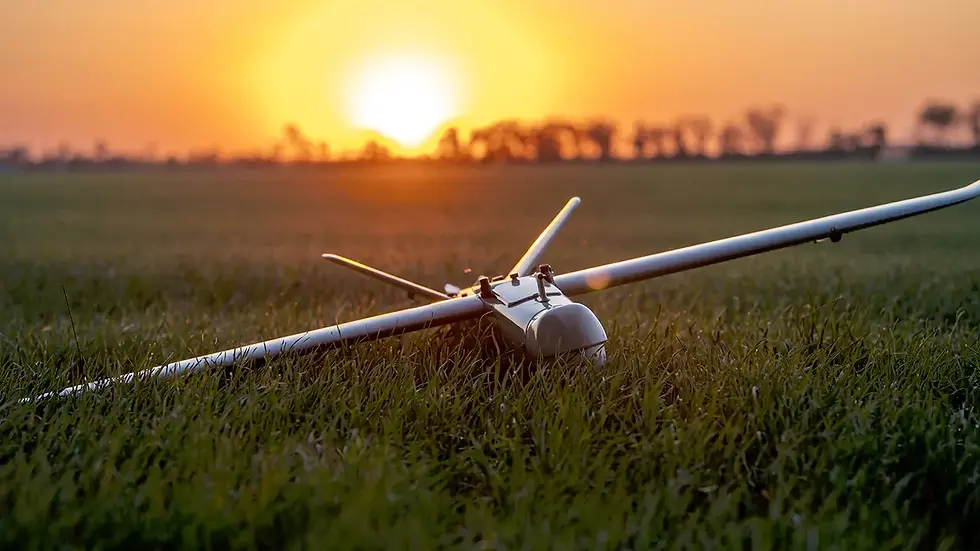
To better understand the niche of the complex, let's compare it with other well-known reconnaissance platforms of the Ukrainian Armed Forces:
Parameter | Leleka-100 | Shark (Ukrspecsystems) | Spectator M2 |
Take-off weight | 4.5 – 5.5 kg | ~10 kg | 8.7 kg |
Wingspan | 1.98 m | 3.4 m | 3 m |
Launch method | Elastic catapult / By hand | Pneumatic catapult | From catapult |
Communication range | 45 – 90 km | Up to 80 km | Up to 90 km |
Flight duration | Up to 5 hrs (M2R mod) | Up to 4 hrs | Up to 4 hrs |
The Leleka-100 wins due to its lighter weight, compactness, and simpler launch, making it an ideal solution for rapid deployment and operation by small mobile groups.
Energy Efficiency: Why the Battery is Half of the Mission's Effectiveness
For an electric fixed-wing drone, the battery is not just a replaceable part, but a factor that determines the fate of the combat mission. If the battery does not meet the declared parameters, the drone will not be able to reach the target or return to base.
The operational specifics of such UAVs dictate strict requirements for the power elements:
Specific energy density (Wh/kg). Every extra gram of the battery means a reduction in payload or a deterioration in aerodynamics. Using modern high-discharge Solid-State cells allows achieving maximum energy at minimum weight.
Voltage stability and current output. The engine requires peak power during a sharp climb or when fighting strong headwinds (up to 20 m/s). The battery must deliver high currents without a critical voltage drop.
Resistance to temperature extremes. At an operating altitude of 1,500 meters, the temperature is significantly lower than on the ground. The drone's operating range is from −20 °C to +40 °C. The battery pack must have the right chemistry and thermal insulation so as not to lose 30% of its capacity in freezing weather.
Reliability of the BMS (Battery Management System). Accurate monitoring of the remaining charge is critical. An error in telemetry can result in the aircraft lacking the energy to return. Furthermore, the BMS must protect the pack from degradation during aggressive field operation.
Drone Power Solutions from Pawell

PAWELL specializes in designing and manufacturing reliable battery packs for drones of various classes, in particular for reconnaissance flying wings. We understand the specifics of operating systems on the frontline and offer engineering solutions that increase their autonomy:
✓
✓
✓
✓
✓ Custom battery packs made of modern Solid-State or Li-ion cells tailored to specified dimensions and aircraft weight requirements;
✓ Advanced balancing systems (BMS) for safe operation and accurate telemetry transmission;
✓ Bench testing of each pack under simulated takeoff and cruise flight loads;
✓ Ground control station (GCS) solutions: manufacturing portable charging stations based on LiFePO4 for uninterrupted power supply to ground control stations, relays, and antenna trackers.

What is Already Happening on the Frontline?
Feedback from a military operator of the Leleka-100 UAV about PAWELL batteries:
[19:19, 18.08.2026] +380 *******: "Greetings, we ordered 40Ah batteries from you, mostly used them for the Leleka-100. We are very satisfied with the result even without spacers (Leleka operators will understand), it takes 2:20-2:30 hours in the air with absolutely no problems, and this is despite the fact that the flight altitude is 2-3 times higher than standard (which in itself heavily drains the battery). There is still a battery reserve of about 20-25 minutes left, but we keep it purely in case of emergency situations. From other Leleka operators who used the same batteries, I heard that when using spacers they flew for almost 3:30. We also tested them for the Leleka-100M2, there is also a noticeable increase in time there, but not as strong, about 20 minutes. As for wishes, it would be interesting to try a battery with the same cells but for about 60Ah (or based on the weight, then ~3.5 kg, I think it will fit perfectly for the Leleka-100M2)."
Frequently Asked Questions (FAQ)
1. Who manufactures the Leleka-100 UAV?
The drone is developed and mass-produced by the Ukrainian company DeViRo (LLC "VIC DEVIRO"), which is part of the NAUDI holding.
2. What is the Leleka-100 UAV designed for?
Its main tasks are deep aerial reconnaissance, artillery fire adjustment, patrolling, and terrain mapping.
3. What is the real flight duration of the Leleka-100 on a single charge?
In base versions, the flight lasts from 1.5 to 2.5 hours. The upgraded M2R version, thanks to the use of a new powerful battery pack, is capable of staying in the air for up to 5 hours.
PAWELL batteries provide a significant increase in flight time compared to the standard battery.
4. How does the Leleka-100 differ from the Shark and Spectator M2?
The main difference is the lighter weight and the ability to launch by hand without a catapult, while heavier analogs usually require additional equipment for takeoff.
5. How does freezing weather affect the drone's battery performance?
Low temperatures increase the internal resistance of the cells, which can reduce the effective battery capacity by 15–30%. This issue is solved by using special frost-resistant cells and insulating the battery compartment.
6. What are the battery requirements for fixed-wing drones?
The main requirements are: maximum specific energy density per kilogram of weight, stable delivery of high currents without voltage drops, resistance to temperatures from −20 °C to +40 °C, and a reliable charge monitoring system (BMS).
Need reliable batteries for long missions?
The Leleka-100 complex has proven its effectiveness as one of the best aerial reconnaissance assets. However, its full potential is unlocked only when using high-quality power cells. Since the route range, behavior in the wind, and time in the air directly depend on the battery, partnering with professional battery manufacturers like PAWELL is an integral part of successfully completing combat missions.


